
When most people think about a construction project, they naturally focus on the visible materials—the lumber, decking, siding, roofing, or trim. Those materials certainly deserve attention, but experienced architects, engineers, and builders know that another component is just as important, even though it often goes unnoticed.
That component is the hardware.
Whether it’s a structural screw, joist hanger, lag bolt, post anchor, hurricane tie, or concealed deck fastener, every piece of hardware has a specific job to perform. In fact, on commercial construction projects, engineers routinely specify not only the type of connector required, but often the manufacturer, model number, protective finish, and allowable load rating. Contractors are typically required to submit product data—or “submittals”—demonstrating that every connector, fastener, and structural accessory complies with the project specifications before construction even begins.
Most residential projects don’t involve that same level of documentation, but the underlying principle remains exactly the same: the quality of the hardware can directly affect the strength, durability, and safety of the finished project.
At Norcross Supply, we’ve spent decades helping homeowners and professional contractors select not only quality lumber, but also the hardware needed to build projects that stand the test of time. Because durable construction isn’t simply about choosing good lumber—it’s about building an entire system that works together.
Hardware Is More Than Just a Box of Screws
It’s easy to assume that hardware is simply a commodity. After all, one box of screws may look very much like another.
In reality, today’s construction hardware is highly engineered. Every connector is designed to perform a specific function under specific conditions.
Structural connectors transfer loads from one framing member to another. Joist hangers distribute weight safely into supporting beams. Post anchors secure columns while helping protect them from moisture. Structural screws are engineered to resist withdrawal and shear forces that ordinary screws simply aren’t designed to handle.
When properly selected and installed, these components become an integral part of the structure itself.
That’s one reason architects and engineers devote so much attention to hardware specifications. They understand that even premium lumber cannot perform properly if it’s connected with inferior or improperly selected hardware.
Not All Hardware Is Created Equal
One of the biggest misconceptions in residential construction is that all hardware performs equally well.
Nothing could be further from the truth.
Two joist hangers may appear nearly identical while differing significantly in:
- Steel thickness
- Load capacity
- Corrosion resistance
- Protective coatings
- Approved fasteners
- Building code approvals
- Manufacturer testing standards
The same principle applies to screws, bolts, anchors, and structural connectors.
Some hardware is designed strictly for interior applications. Other products are engineered specifically for exterior environments where moisture, humidity, ultraviolet exposure, and temperature changes create far more demanding conditions.
Choosing hardware simply because it costs less can become an expensive mistake if it results in premature corrosion or reduced structural performance.
Why Corrosion Resistance Matters
Georgia’s climate can be especially demanding on exterior construction.
High humidity, frequent rainfall, and seasonal temperature changes create conditions that can accelerate corrosion if improper hardware is used.
Pressure-treated lumber presents another consideration. The preservatives used to protect treated lumber can react with certain metals, increasing the likelihood of corrosion if incompatible fasteners or connectors are installed.
For that reason, today’s builders often specify galvanized, mechanically coated, or stainless-steel hardware depending on the application.
Selecting the proper finish isn’t simply about appearance—it’s an important part of safe building practices that helps preserve the structural integrity of the entire project for years to come.
Hardware and Lumber Must Work Together
Construction is really a series of interconnected systems.
Quality lumber provides the strength.
Quality hardware allows that strength to be transferred safely throughout the structure.
Neither one performs at its best without the other.
At Norcross Supply, customers can choose from a wide variety of premium building materials, including Western Red Cedar, Cypress, Hemlock, Douglas Fir, pressure-treated Southern Yellow Pine, and Trex® composite decking.
Each of these materials has unique characteristics, and each may require different fastening systems or structural connectors.
For example:
- Pressure-treated lumber requires compatible corrosion-resistant hardware.
- Cedar often benefits from stainless steel fasteners to minimize staining and corrosion.
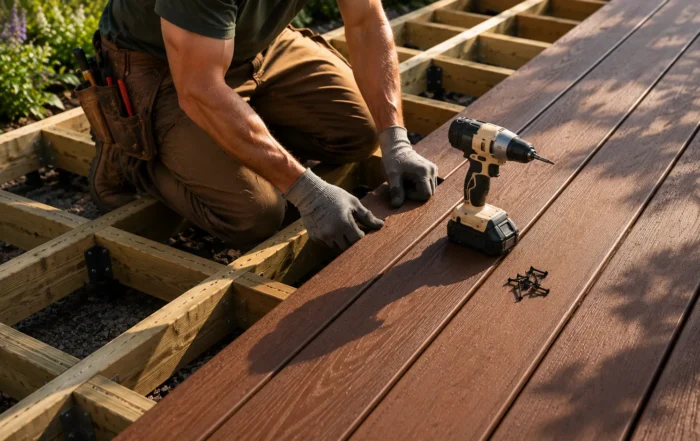
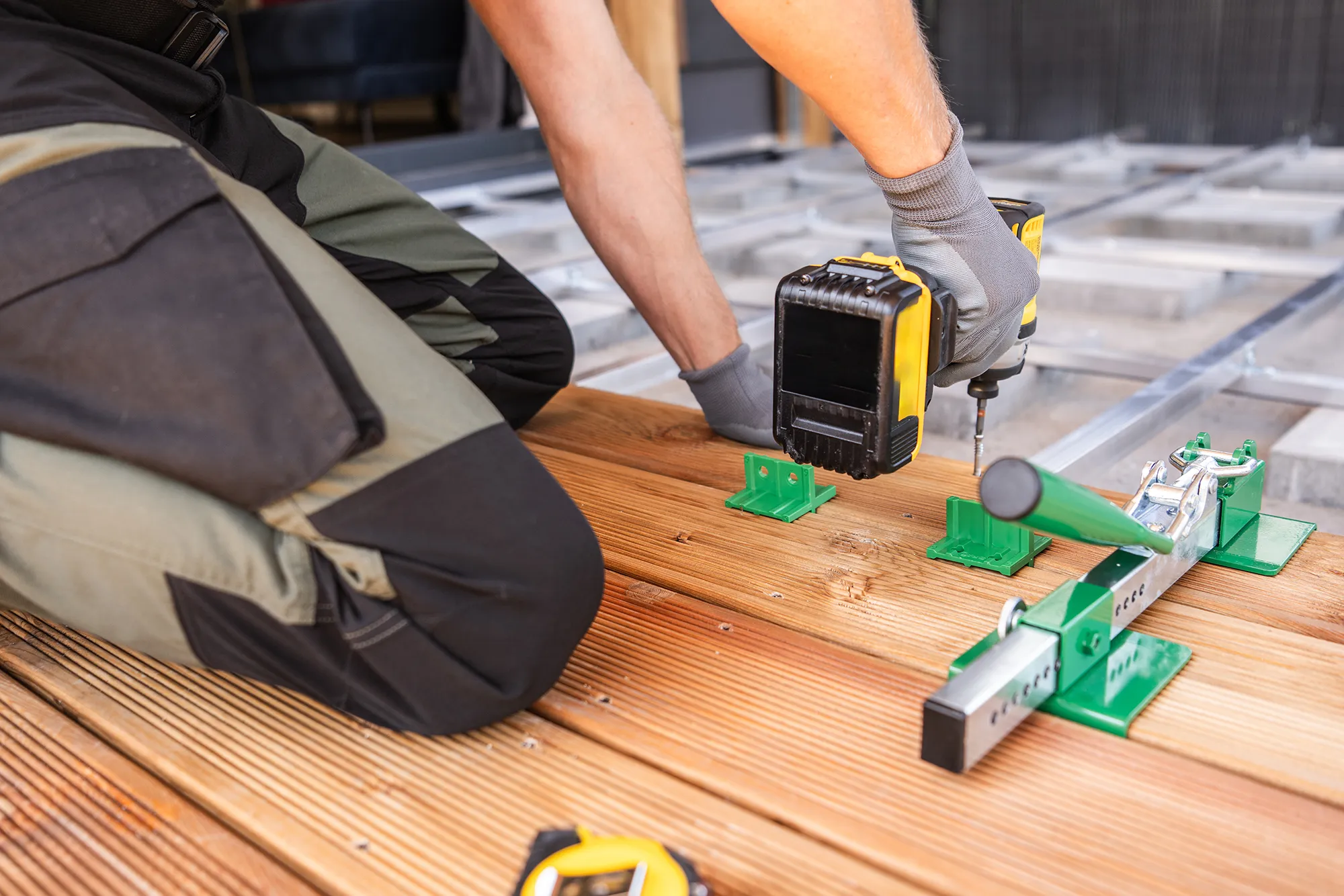
- Composite decking systems frequently use concealed fastening systems specifically designed by the manufacturer.
- Structural framing members require connectors engineered for specific loads.
Matching the hardware to the material is one of the simplest ways to improve both performance and longevity.
The Importance of Structural Connectors
Many of the most important pieces of hardware are hidden from view once construction is complete.
Joist hangers.
Hurricane ties.
Post bases.
Beam connectors.
Anchor bolts.
These components rarely receive much attention after installation, yet they perform some of the most critical structural functions within the project.
They help distribute loads properly, reinforce framing connections, improve resistance to movement, and contribute to the overall stability of the structure.
In many cases, building codes require specific connector types and installation methods. The connector itself is only part of the equation—the proper fasteners specified by the manufacturer are equally important.
Using substitute nails or screws may reduce the connector’s published load capacity and could even result in code violations.
These details illustrate why professional builders pay close attention to hardware selection rather than treating it as an afterthought.
Building Codes Are Written for a Reason
Another area where hardware plays an important role is code compliance.
Many homeowners think building codes simply add paperwork to a project.
In reality, building codes represent decades of engineering knowledge and lessons learned from actual construction failures.
Deck construction offers an excellent example.
Because decks are frequently attached directly to the home, building codes often specify approved ledger board attachment methods, flashing requirements, joist hanger installation, fastener spacing, and structural connector requirements.
These requirements help ensure the deck safely supports anticipated loads while protecting the home from moisture intrusion.
Using the correct hardware helps builders comply with these standards while providing homeowners with confidence that their investment has been built properly.
The Smallest Components Often Protect the Largest Investment
One of the interesting realities of construction is that some of the least expensive items often perform some of the most important jobs.
A relatively inexpensive joist hanger helps support an entire floor system.
A handful of structural screws secures framing members carrying thousands of pounds.
Proper flashing and connectors can prevent moisture from entering a home, avoiding repairs that might otherwise cost thousands of dollars.
In other words, modest investments in quality hardware often protect much larger investments in lumber, labor, and the home itself.
Viewed from that perspective, selecting quality hardware becomes one of the smartest investments a homeowner can make.
More Than Products—Practical Guidance
Choosing hardware can sometimes feel overwhelming.
There are dozens of fastener types, connector styles, protective coatings, and manufacturer recommendations to consider.
That’s where experience matters.
For decades, Norcross Supply has helped contractors and homeowners understand which products are appropriate for their specific projects. Whether someone is building a backyard deck, installing a porch ceiling, framing an addition, or working with composite decking, the staff can help match the proper hardware to the selected materials.
Because Norcross supplies both lumber and hardware, customers have the convenience of sourcing an entire building system from one location rather than piecing together products from multiple suppliers.
That integrated approach helps simplify the project while supporting durable construction from the ground up.
Safe Building Practices Begin Before Construction Starts
Many construction problems don’t result from poor workmanship—they begin during planning.
Taking time to understand the appropriate materials, selecting compatible hardware, and following manufacturer recommendations can prevent problems long before they occur.
Whether you’re a homeowner planning your first deck or an experienced contractor managing multiple projects, investing in quality materials and properly engineered hardware contributes directly to safer, stronger, and longer-lasting construction.
At Norcross Supply, helping customers make informed decisions has been part of the company’s commitment to service since 1946.
Conclusion
Quality construction is never the result of a single product. It comes from combining quality materials, properly engineered hardware, sound building practices, and careful attention to detail.
While lumber often receives the spotlight, the hardware that connects, supports, and reinforces that lumber plays an equally important role in the finished project. Selecting the proper fasteners, structural connectors, anchors, and corrosion-resistant hardware helps create structures that remain safe, stable, and attractive for years to come.
Whether you’re planning a new deck, porch, fence, or other outdoor project, Norcross provides the hardware, quality lumber, and practical guidance that help homeowners and contractors alike achieve durable construction while following safe building practices every step of the way.
Visit Norcross Supply Today
Norcross Supply Company
4955 Buford Highway
Norcross, GA 30071
Phone: (770) 448-2128
Email: info@norcrosssupply.com
Website: www.norcrosssupply.com
About the Author: Grant Carmichael

Share This Story, Choose Your Platform!
How can we help?
[ninja_form id=1]